13 · Reproduction capsule
The capstone is a small public scientific argument that another person can rebuild, inspect, and challenge.
Question: can one declared workflow turn public or supplied data into a trustworthy figure?
Output: a one-command Basilisk-to-publication reproduction capsule.
The deliverable
Choose one modest physical question:
- When does an observable plateau?
- Does a reduced quantity follow a limiting scaling?
- How does an outcome change across one nondimensional parameter?
- Does a Python reduction agree with a C/Basilisk result?
Do not begin with “make a dashboard” or “analyse everything”. One question is enough.
Required structure
capsule/
├── README.md
├── pyproject.toml
├── uv.lock
├── data/
│   ├── README.md
│   └── reduced.csv
├── src/
│   └── analysis.py
├── tests/
│   └── test_analysis.py
├── figures/
│   └── result.pdf
├── manifest.sha256
└── Makefile
Raw simulation dumps may live in a durable archive rather than Git. The data
README must name the source and explain how reduced.csv was produced.
Required reasoning
Question
State one claim the figure can test. Name the control and response variables.
Representation
Document schemas, units, shapes, case IDs, missing values, and valid ranges.
Transformation
Separate reading, computation, and presentation. Expose genuine choices as arguments. Do not require source edits to change an input path.
Verification
Include at least three checks:
- schema or physical invariant;
- analytic limit, scaling, conservation, or cross-code comparison;
- regression on a settled reduced result.
Evidence
Ship reduced data, a legible figure, and a caption that says what the result supports and what remains uncertain.
Execution contract
One command must rebuild the public artefacts:
It should:
- install or verify the locked environment;
- validate inputs;
- run reductions;
- run tests;
- create the figure;
- update or verify checksums;
- return non-zero if anything fails.
The course's miniature example fulfils the same contract:
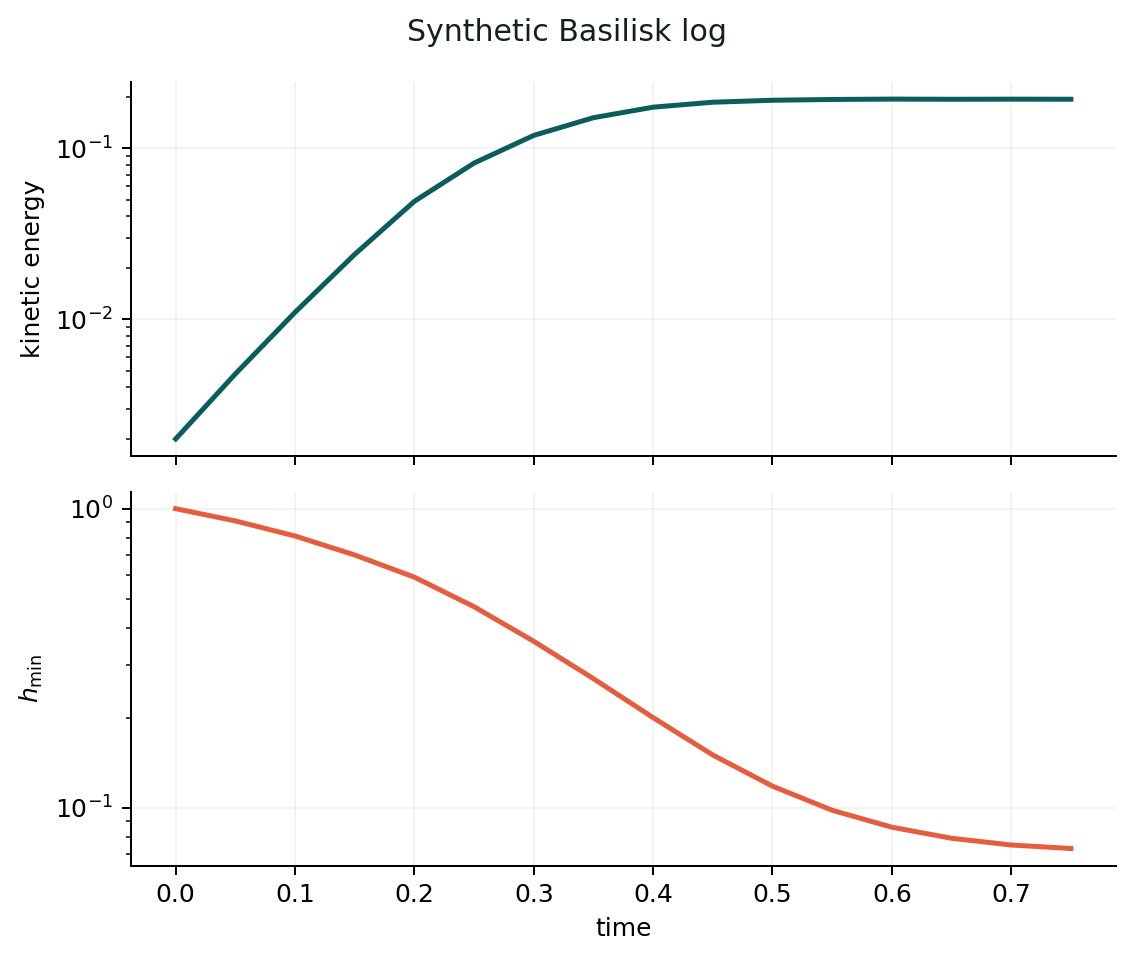
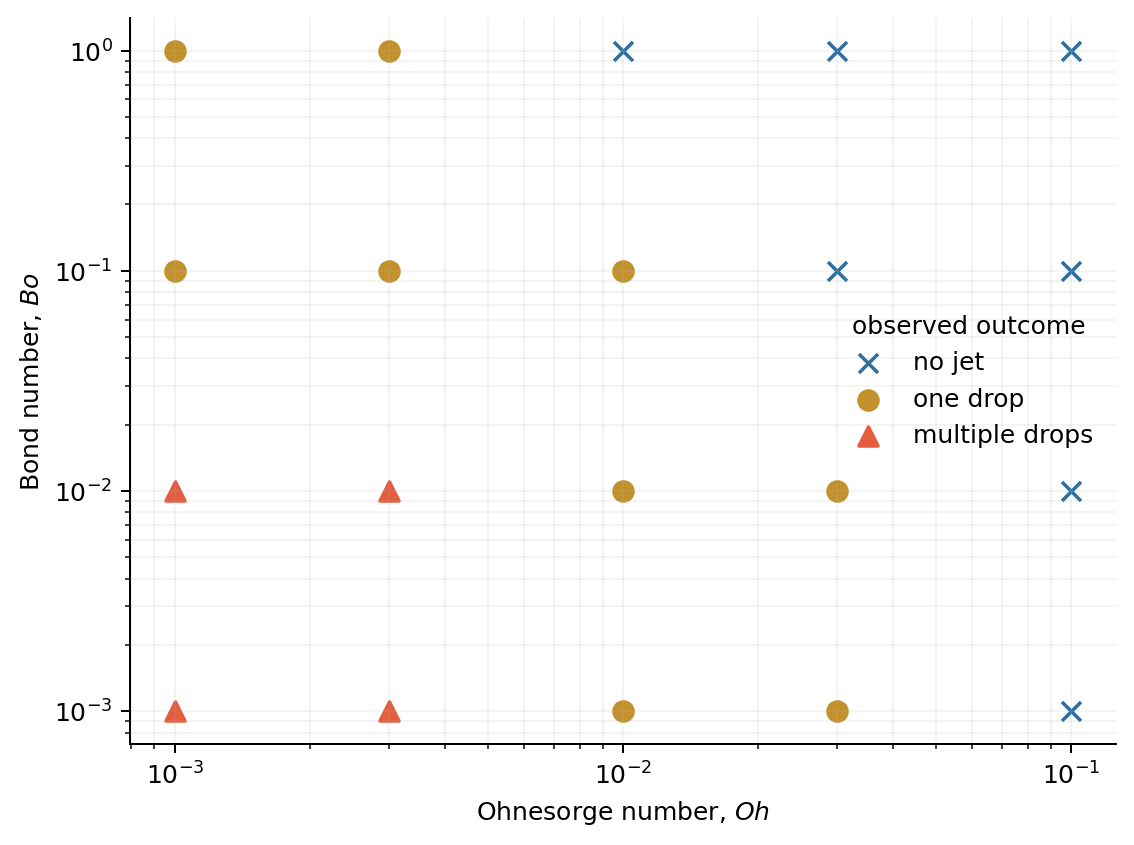
It verifies the locked environment, runs the tests, rebuilds copied inputs,
reduced JSON, and both figures, writes relative SHA-256 entries, verifies every
digest, and fails visibly if any step fails. Read the Makefile and
examples/reproduce_capsule.py; the sequence is intentionally ordinary.
HPC extension
If the capsule begins from Basilisk snapshots:
archived snapshot
   ↓ qcc-compiled extractor on compute node
per-snapshot reduced row
   ↓ validated Python gather
reduced table
   ↓ tested analysis
figure
Requirements:
- pin the Basilisk source or release;
- save the extractor source and compile command;
- submit extraction as a batch job;
- cap concurrency to the allocation;
- make per-snapshot outputs restartable;
- record failed or omitted snapshots;
- never post-process on the login node.
The public
Jumping-Drops/postProcess
pipeline is a useful operational reference. The
SingularJets2026
capsule is the stronger reproducibility endpoint.
Review rubric
| Criterion | 0 | 1 | 2 |
|---|---|---|---|
| Question | absent | broad | precise and falsifiable |
| Representation | implicit | partial | schema, units, shapes, provenance |
| Transformation | tangled | mostly separated | small functions and thin CLI |
| Verification | “looks right” | one check | independent checks plus regression |
| Evidence | figure only | data or caption | reduced data, figure, bounded claim |
| Reproduction | manual folklore | documented steps | clean one-command rebuild |
| Collaboration | private assumptions | some notes | licence, README, reviewable history |
The target is not fourteen points for ornament. It is no zero in any column.
Submission
Open a pull request containing:
- the capsule;
- a short statement of the claim;
- the rebuild command;
- validation output;
- one rendered figure;
- known limitations.
Keep the first attempt in the branch history or a clearly named file if AI assistance was substantial. Explain the scientific corrections made.
Final reflection
Answer:
- Which result would most change under a different modelling choice?
- Which test gives you the most confidence?
- Which part still depends on judgement rather than automation?
- What would a new student need to reproduce this in a year?
If you can answer those clearly, you have learned more than Python syntax.